
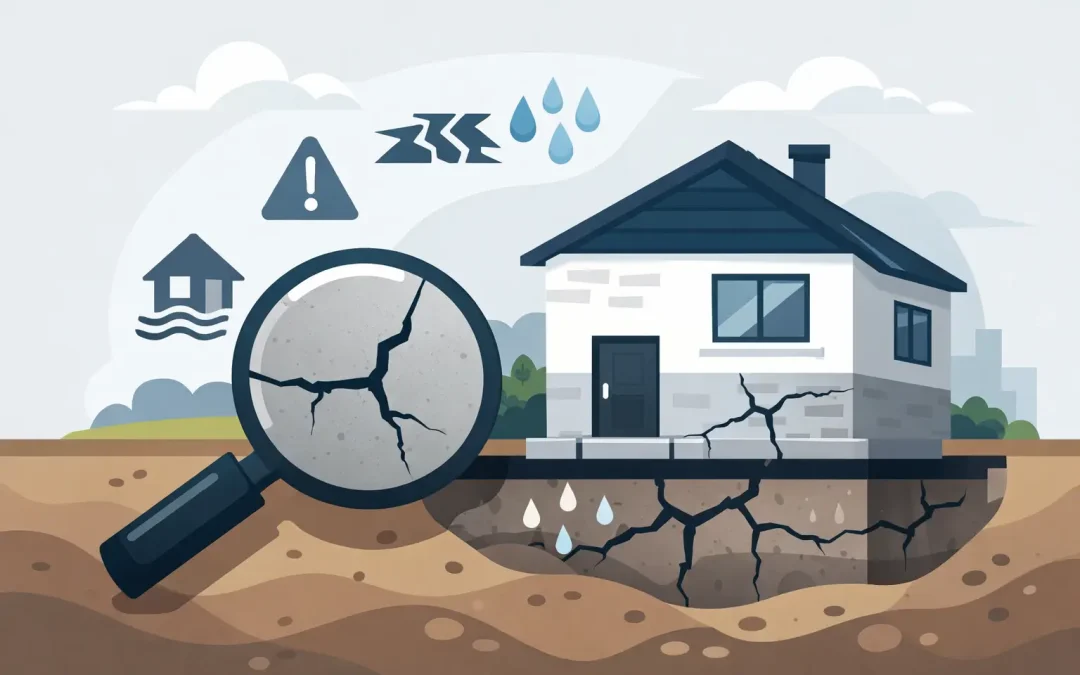
A hairline crack in a garage slab is not the same problem as a diagonal crack running from a window corner to the foundation. So, are foundation cracks dangerous? Sometimes. The risk depends on where the crack is located, its direction, width, depth, whether it is changing, and what is happening to the structure around it.
For Bay Area property owners, delaying an evaluation can turn a manageable repair into a larger structural and water-management project. Foundations are built to transfer building loads safely to the soil. When the soil moves, water enters, or a foundation wall begins to shift, cracks can be evidence that the system is no longer performing as intended.
Are Foundation Cracks Dangerous? It Depends on the Pattern
Concrete is strong in compression, but it can crack as it cures, shrinks, and responds to movement. Not every crack means a house or commercial building is unsafe. New concrete commonly develops fine shrinkage cracks, especially in slabs. These are often superficial and do not necessarily affect structural capacity.
The concern rises when a crack points to movement, uneven settlement, lateral soil pressure, or loss of support below the structure. A foundation crack becomes more serious when it widens over time, extends through a wall, allows water inside, or appears with other changes such as sloping floors, sticking doors, separated trim, or gaps at exterior joints.
A useful rule is this: a crack should be evaluated based on its behavior and context, not width alone. A narrow crack that is actively growing can matter more than an older, wider crack that has remained stable for years.
Cracks That Often Require Prompt Attention
Horizontal cracks in a basement or retaining wall deserve prompt review. They can indicate lateral pressure from saturated soil, poor drainage, expanding soil, or inadequate wall reinforcement. If the wall is bowing, leaning, or showing a series of horizontal cracks, the condition may require shoring, drainage corrections, wall reinforcement, or a more substantial structural repair.
Diagonal cracks, particularly those that run from the corners of doors and windows or form a stair-step pattern in masonry, can be associated with differential settlement. This means one portion of the foundation is moving differently than another. Settlement does not always continue, but a specialist should determine whether the movement is historic, seasonal, or active.
Vertical cracks are more variable. A thin vertical crack in a poured concrete foundation wall may be a shrinkage crack. A wide vertical crack, a crack with offset on either side, or one that leaks after rainfall needs closer investigation. Offset is especially meaningful because it can show that one side of the foundation has moved relative to the other.
Warning Signs Beyond the Crack Itself
Foundation problems rarely announce themselves through one visual clue. The condition of the building and site often provides the stronger diagnosis. Pay attention when foundation cracks occur alongside changes in the structure, drainage, or surrounding soil.
Signs that justify a professional assessment include floors that noticeably slope, doors or windows that suddenly bind, drywall cracks that reappear after patching, brick or stucco separation, and gaps where walls meet ceilings. Outside, look for soil pulling away from the foundation, standing water near the building, downspouts discharging too close to the wall, and leaning retaining walls.
In below-grade spaces, moisture is a major concern even when a crack is not causing structural movement. Water entering through a basement wall can damage finishes, promote mold growth, corrode reinforcing steel, and create hydrostatic pressure against the foundation. Sealing the visible crack may be appropriate in a limited situation, but it is not a complete repair if poor drainage or exterior water pressure remains unresolved.
Why Bay Area Foundations Can Develop Cracks
Bay Area properties face a mix of conditions that can affect foundation performance. Hillside sites may experience varying soil depths and drainage paths. Older homes may have foundations built to earlier standards. In some areas, expansive soils shrink during dry periods and swell when moisture returns, creating seasonal movement beneath slabs and footings.
Seismic activity also makes proper foundation connections and load paths critical. An earthquake retrofit is not designed to repair every crack, but it can strengthen the connection between a wood-framed structure and its foundation, reducing the risk of damaging displacement during seismic events. The right solution depends on the building type, existing foundation, soil conditions, and engineering requirements.
Construction activity can also play a role. Excavation for a neighboring project, changes to site drainage, new additions, heavy vehicle traffic, or removal of trees can alter soil conditions around an existing structure. This is one reason foundation work should be approached as a coordinated project involving design review, permitting, excavation planning, and structural concrete installation rather than a surface-level patch.
When a Foundation Crack Is an Urgent Safety Issue
Some conditions should not wait for a routine inspection. A foundation wall that is visibly bowed, leaning, bulging, or displaced can lose its ability to resist soil loads. Severe cracking accompanied by a sinking floor, rapidly growing gaps, or substantial water entry after storms may also require immediate action.
If there is a risk of collapse, active soil movement, or a compromised excavation, keep people away from the affected area and contact the appropriate structural professional or emergency service. Do not attempt to chip out, widen, or fill major cracks before the condition is documented and evaluated. Cosmetic work can hide valuable evidence and may not address the cause.
For less immediate concerns, take clear photos with dates, measure the crack at several points, and note any related changes in the building. Monitoring can help distinguish a stable condition from active movement, but it should not replace an assessment when structural signs are present.
How Professionals Determine the Right Repair
A dependable evaluation starts with identifying the source of the crack. That may involve reviewing the structure, foundation type, site grading, drainage, visible soil conditions, and history of alterations. On complex projects, a structural engineer may specify the repair design, particularly where load-bearing walls, significant settlement, hillside conditions, or commercial occupancy are involved.
Repairs should match the underlying failure mechanism. If settlement has reduced support beneath a foundation, underpinning may be used to transfer loads to more suitable bearing conditions. Depending on the project, this can involve concrete piers, grade beams, or other engineered support systems. Where a building needs to remain supported during excavation or foundation modification, shoring may be required.
If water is the primary issue, the scope may include exterior waterproofing, drainage improvements, proper backfill, and repair of the concrete itself. Interior crack injection can be useful for certain nonmoving cracks, but it cannot correct exterior hydrostatic pressure, settlement, or a wall that is structurally deflecting. The least disruptive option is not always the most durable one.
For older homes, additions, ADUs, and basement conversions, foundation work may involve connecting new concrete to existing conditions while meeting current code requirements. That is where complete coordination matters. Survey information, engineering, permits, excavation access, temporary support, reinforcement placement, inspections, and concrete placement must all work together.
Avoid These Common Responses
Painting over a crack or applying patch material without checking its cause can create a false sense of security. It may improve appearance temporarily, but it will not stop soil movement or water pressure. Likewise, directing more landscaping against the foundation to hide gaps can worsen drainage.
Avoid assuming that all cracks are harmless because a building is old, or that every crack means full foundation replacement. Both conclusions can lead to expensive mistakes. A stable shrinkage crack may need simple monitoring or waterproofing. An active settlement crack may call for a carefully designed structural repair. The facts on site should drive the decision.
A Practical Next Step for Property Owners
Foundation cracks deserve a calm, informed response. Document what you see, correct obvious drainage issues when safe to do so, and arrange an evaluation when the crack is wide, changing, leaking, offset, or paired with movement elsewhere in the building.
For projects involving settlement, basement walls, seismic upgrades, excavation, or new structural concrete, work with a contractor experienced in the full scope of foundation construction. Benitez Concrete Construction approaches these issues with the coordination they require, from site conditions and permits through excavation, reinforcement, and final concrete work. A timely assessment can preserve the value, safety, and long-term performance of the property before a small warning becomes a larger project.